Word Search: The Ultimate Guide to Fun and Learning
Word Search puzzles have been a favorite pastime for people of all ages for decades. From children learning new vocabulary to adults seeking a relaxing mental challenge, Word Search offers a perfect blend of fun and brain exercise. In this guide, we will explore everything about Word Search, including its benefits, types, tips, and tricks to master these puzzles.
What is Word Search?
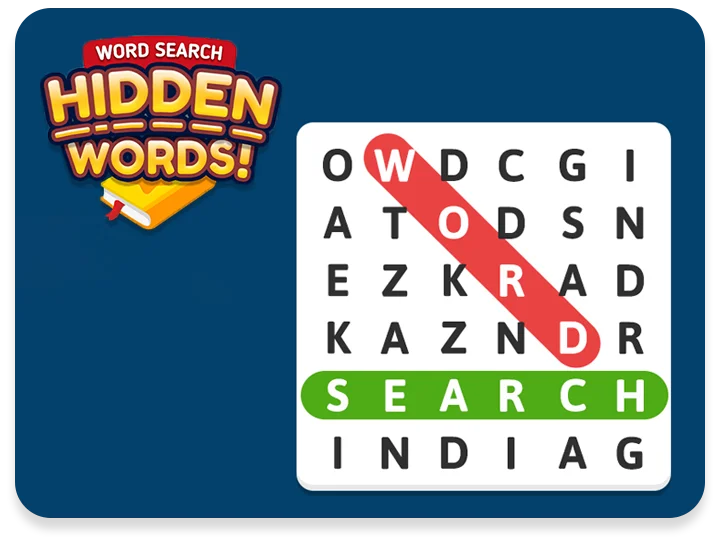
A Word Search is a puzzle consisting of letters arranged in a grid, where the player’s task is to find hidden words. Words may appear horizontally, vertically, diagonally, or even backward. Traditionally, Word Search puzzles are found in newspapers, magazines, and books, but today, they are widely available online through various apps and websites.
The main objective of a Word Search is simple: locate all the hidden words from a given list as quickly as possible. Despite its simplicity, Word Search challenges the brain, improves attention to detail, and enhances vocabulary.
History of Word Search
The first Word Search puzzle was created in 1968 by Norman E. Gibat, and it quickly gained popularity in newspapers and puzzle books. Over time, Word Search has evolved into digital formats, offering interactive experiences that allow players to highlight words with just a tap or click.
Interestingly, while the traditional paper-based Word Search focuses on improving mental acuity, digital versions often include timers, hints, and difficulty levels, making them more engaging for all age groups.
Benefits of Word Search
Playing Word Search regularly offers numerous benefits for both children and adults. Some of the key advantages include:
- Improves Vocabulary: By searching for words repeatedly, players become familiar with new words and their spellings.
- Enhances Concentration: Finding hidden words requires focus, attention to detail, and patience.
- Boosts Problem-Solving Skills: Recognizing patterns and spotting words in different directions trains the brain for analytical thinking.
- Reduces Stress: Engaging in a Word Search puzzle can act as a calming activity, providing relaxation and mental clarity.
- Suitable for All Ages: From schoolchildren to seniors, Word Search is a versatile puzzle that anyone can enjoy.
Types of Word Search Puzzles
There are several types of Word Search puzzles, each offering a unique challenge:
- Traditional Word Search: Words are hidden in a grid, and the player must find all listed words.
- Themed Word Search: Puzzles focus on specific themes like animals, holidays, movies, or sports.
- Timed Word Search: Players must find all words within a limited time, adding a competitive edge.
- Mystery Word Search: Some puzzles include hidden words not listed in the word bank, providing extra challenge.
- Digital Word Search: Online or app-based versions with interactive features, hints, and scoring systems.
No matter the type, Word Search puzzles remain a popular choice for both educational and recreational purposes.
How to Solve a Word Search Efficiently
Solving a Word Search may seem easy, but strategies can help complete puzzles faster:
- Start with Unusual Letters: Words containing rare letters like Q, X, or Z are easier to spot.
- Scan in Patterns: Move your eyes in horizontal, vertical, and diagonal lines systematically.
- Highlight Words: If allowed, mark the words found to avoid confusion.
- Look for Unique Letter Combinations: Recognizing common prefixes, suffixes, or double letters can speed up your search.
- Take Breaks: If stuck, take a short break. Returning with fresh eyes often helps spot hidden words quickly.
By following these tips, even complex Word Search puzzles can become manageable and enjoyable.
Word Search for Education
Teachers and parents have embraced Word Search as a powerful educational tool. Not only does it improve vocabulary, but it also encourages pattern recognition, spelling accuracy, and cognitive development.
For example, a Word Search focused on science terms helps students familiarize themselves with technical vocabulary in a fun, engaging way. Similarly, puzzles featuring historical figures or geography can reinforce classroom learning.
Digital Word Search apps also offer customizable options, allowing educators to create puzzles tailored to specific subjects and difficulty levels. This adaptability makes Word Search a versatile learning aid.
Digital Word Search Games
With the rise of mobile technology, digital Word Search games have surged in popularity. Platforms like Nwoow provide interactive Word Search puzzles that cater to all age groups. Players can enjoy various themes, track their progress, and even compete with friends.
Digital Word Search games offer features that traditional puzzles cannot, such as:
- Instant hints for tricky words
- Timed challenges for faster problem-solving
- Scoring systems to track improvement
- Social sharing to challenge friends
These digital experiences make Word Search more accessible, fun, and engaging than ever before.
Tips to Create Your Own Word Search
If you want to create a personalized Word Search, here are some simple steps:
- Choose a Theme: Decide the topic, like fruits, animals, or movies.
- Select Words: Make a list of words related to your theme.
- Create a Grid: Decide on the size of your grid (10x10, 15x15, etc.).
- Place Words Strategically: Insert words horizontally, vertically, diagonally, and backward for extra challenge.
- Fill Remaining Spaces: Use random letters to complete the grid.
- Test Your Puzzle: Solve it yourself to ensure all words are findable.
Creating a custom Word Search can be a fun activity for classrooms, parties, or even online sharing.
Conclusion
In summary, Word Search puzzles are more than just a fun pastime—they are educational, relaxing, and mentally stimulating. From improving vocabulary and concentration to offering hours of entertainment, the benefits of Word Search are numerous. Whether you prefer traditional paper puzzles or modern digital versions, there is a Word Search puzzle for everyone.
By incorporating Word Search into your daily routine, you can enjoy a fun, brain-boosting activity that enhances learning and provides endless entertainment.
FAQs About Word Search
Q1: What is the main purpose of a Word Search?
A: The primary purpose of a Word Search is to find hidden words in a grid, which improves vocabulary, concentration, and problem-solving skills.
Q2: Are Word Search puzzles educational?
A: Yes, Word Search puzzles are educational. They enhance spelling, vocabulary, and pattern recognition while making learning enjoyable.
Q3: How can I make Word Search more challenging?
A: You can increase difficulty by using backward, diagonal, or overlapping words, or by creating larger grids with more complex themes.
Q4: Can children play Word Search online?
A: Absolutely. Many platforms, including Nwoow, offer child-friendly Word Search puzzles with interactive features suitable for various age groups.
Q5: How often should I play Word Search?
A: Playing Word Search regularly, even 10–15 minutes a day, can help sharpen your brain, improve vocabulary, and reduce stress.